
Clear Estimates Research · cost data for remodeling contractors
Labor or materials: what's driving residential construction cost increases?
Since 2019, materials drove about half to three-quarters of the rise in modeled project costs, and labor the rest. Where you build, and what you build, decide the split.
By Nolan Orfield, PhD, Founder ·
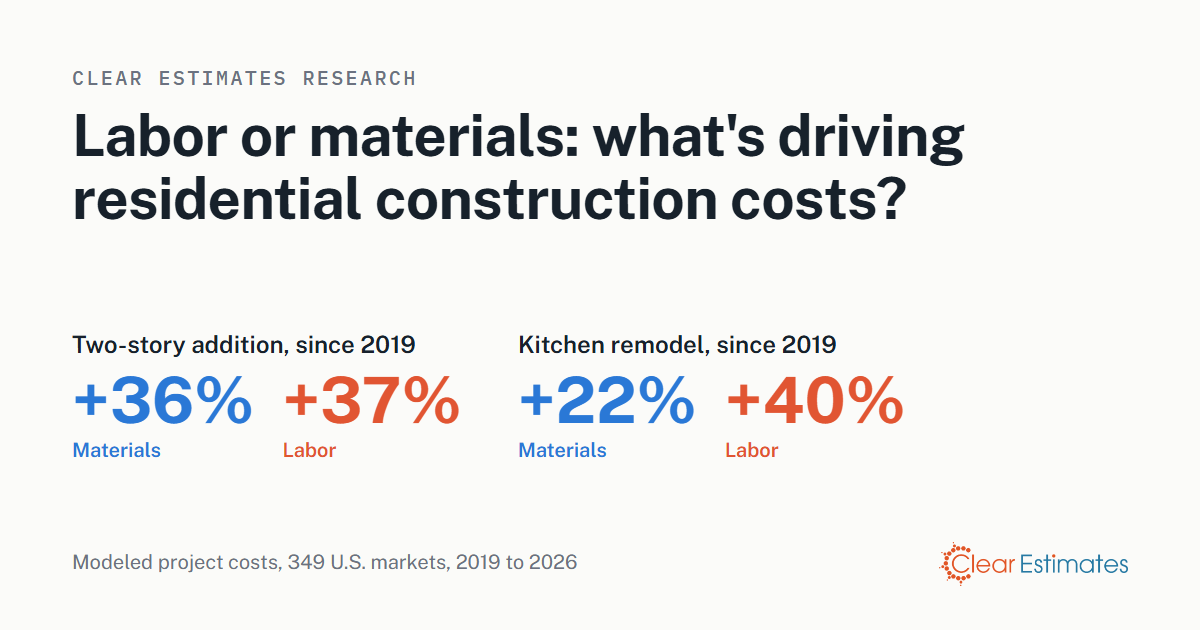
Two-story addition
- Materials
- +36%
- Labor
- +37%
Kitchen remodel
- Materials
- +22%
- Labor
- +40%
Labor's share of the increase
23% to 54%
Markets analyzed
349
Material prices make the headlines, and lumber's run in 2021 and 2022 was hard to miss. But when we modeled two common projects across 349 U.S. markets, materials explained only part of the rise in costs since 2019. Depending on where you build, labor drove anywhere from about a quarter to just over half of the increase.
What we measured
We modeled two projects: a 600-square-foot two-story addition and a 300-square-foot kitchen remodel. Each is priced in every market, every year, with that year's local material costs and labor rates for up to 11 trades. The material side draws on more than four million line items from real contractor estimates since 2019. These are modeled project costs, not transaction prices or wages paid.
We picked these two because they sit at opposite ends of a typical remodeling business: one is heavy on structure, the other on finishes.
Nationally, materials and labor rose about the same for an addition
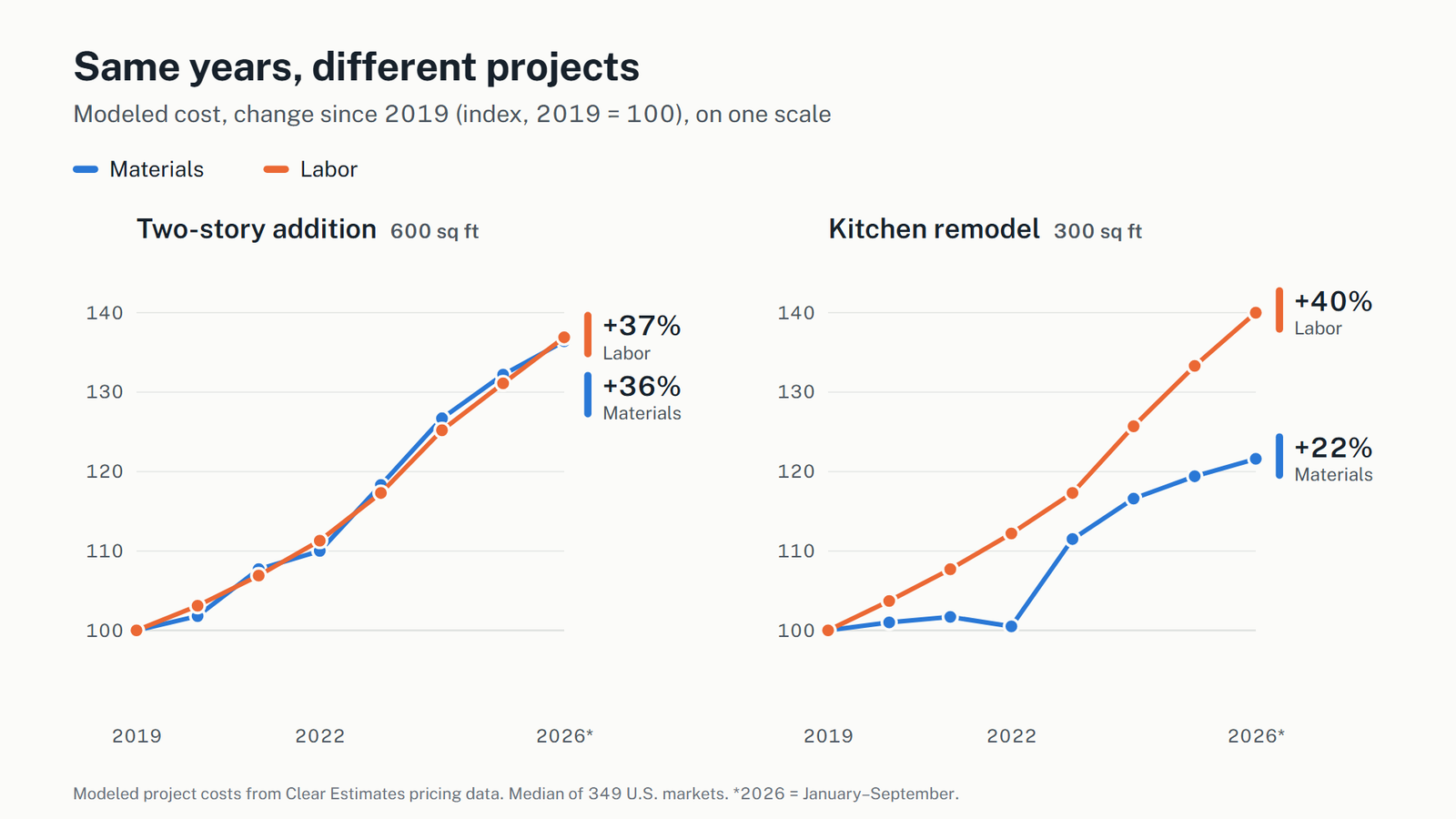
For the typical two-story addition, the modeled cost rose from about $79,700 in 2019 to about $108,900 in 2026. Materials rose 36% and labor rose 37%.
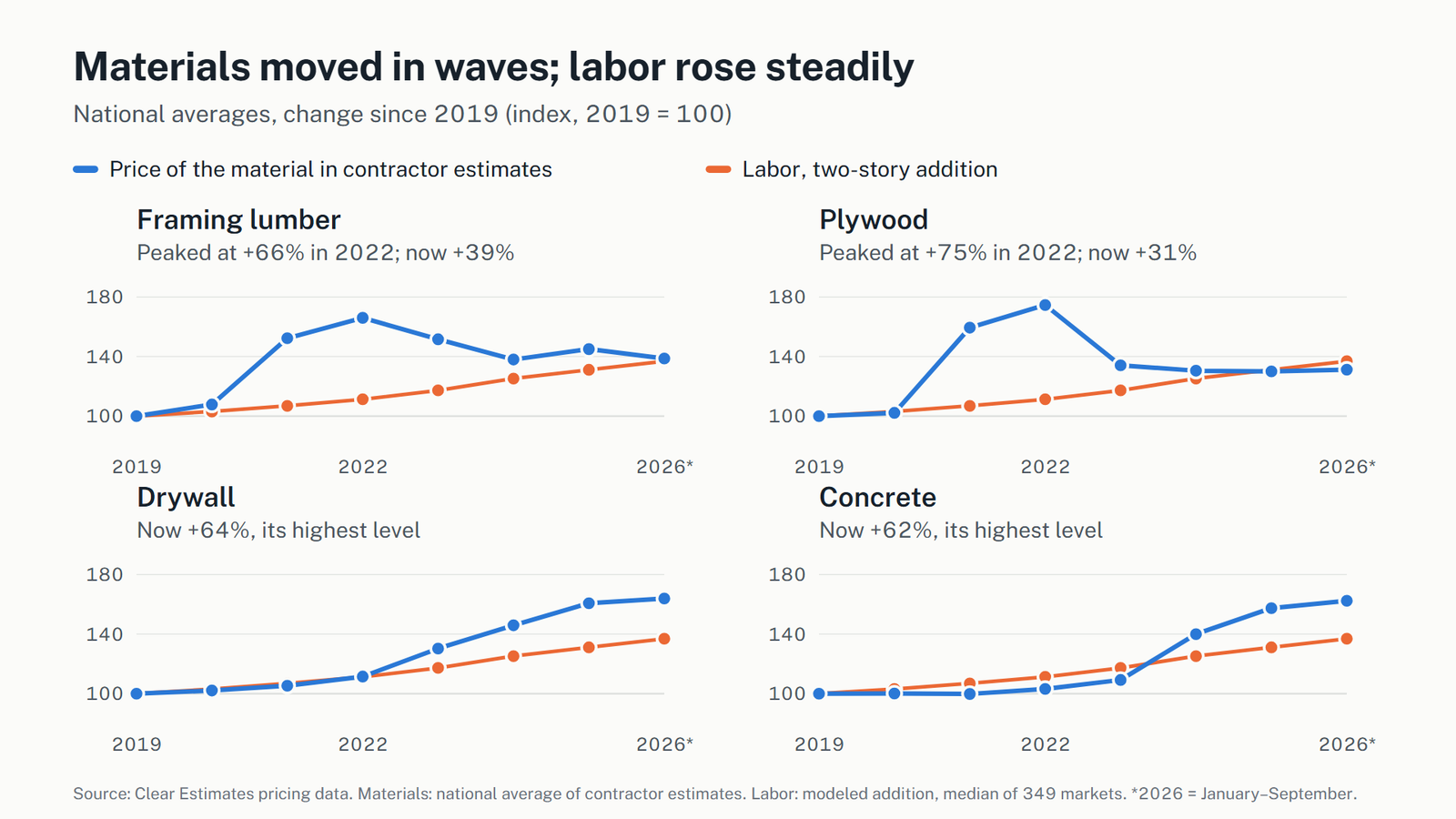
The materials total hides two separate waves. Framing lumber and plywood spiked in 2021 and 2022, peaking 66% and 75% above 2019, then eased. Drywall and concrete climbed later and are at their highest now, up 64% and 62%. Labor moved differently: a steady increase every year, with no spike and no retreat.
Market by market, labor is the variable
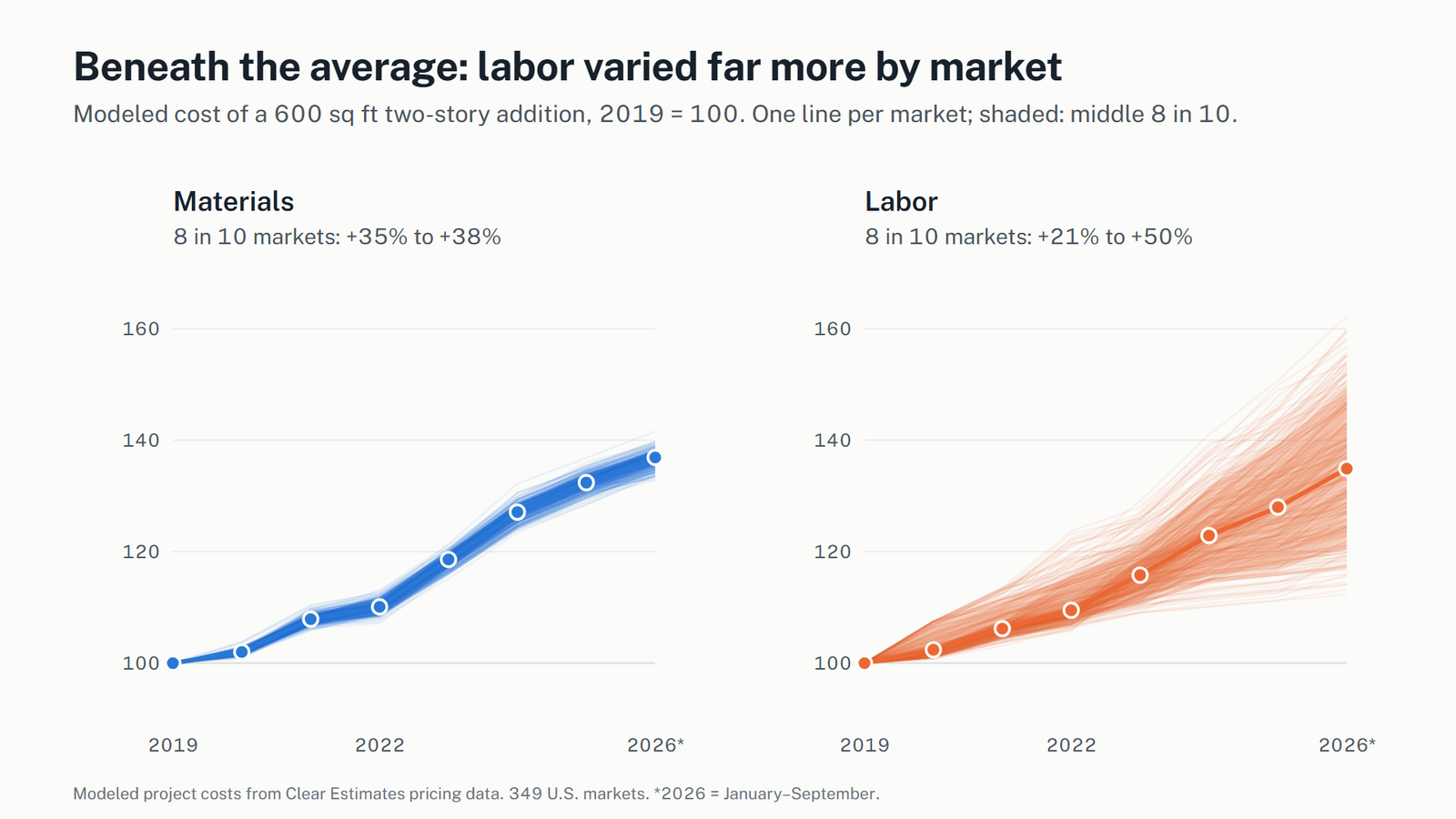
That steady national labor line is an average. Look at each market on its own and the picture changes. For the addition, materials rose between 35% and 38% in eight of every ten markets. Labor rose anywhere from about 20% to 50% in the same eight in ten.
Location still matters for materials, but much less: their prices moved together across the country. Labor rates are local, and they moved at very different speeds.
Trades moved at different speeds too. Nationally, electricians' rates rose 52% since 2019 and plumbers' 49%, while carpenters' rose 33%. A job heavy on electrical and plumbing work felt more of the labor increase than one that is mostly framing.
Where labor drove half the increase, and where it drove a quarter
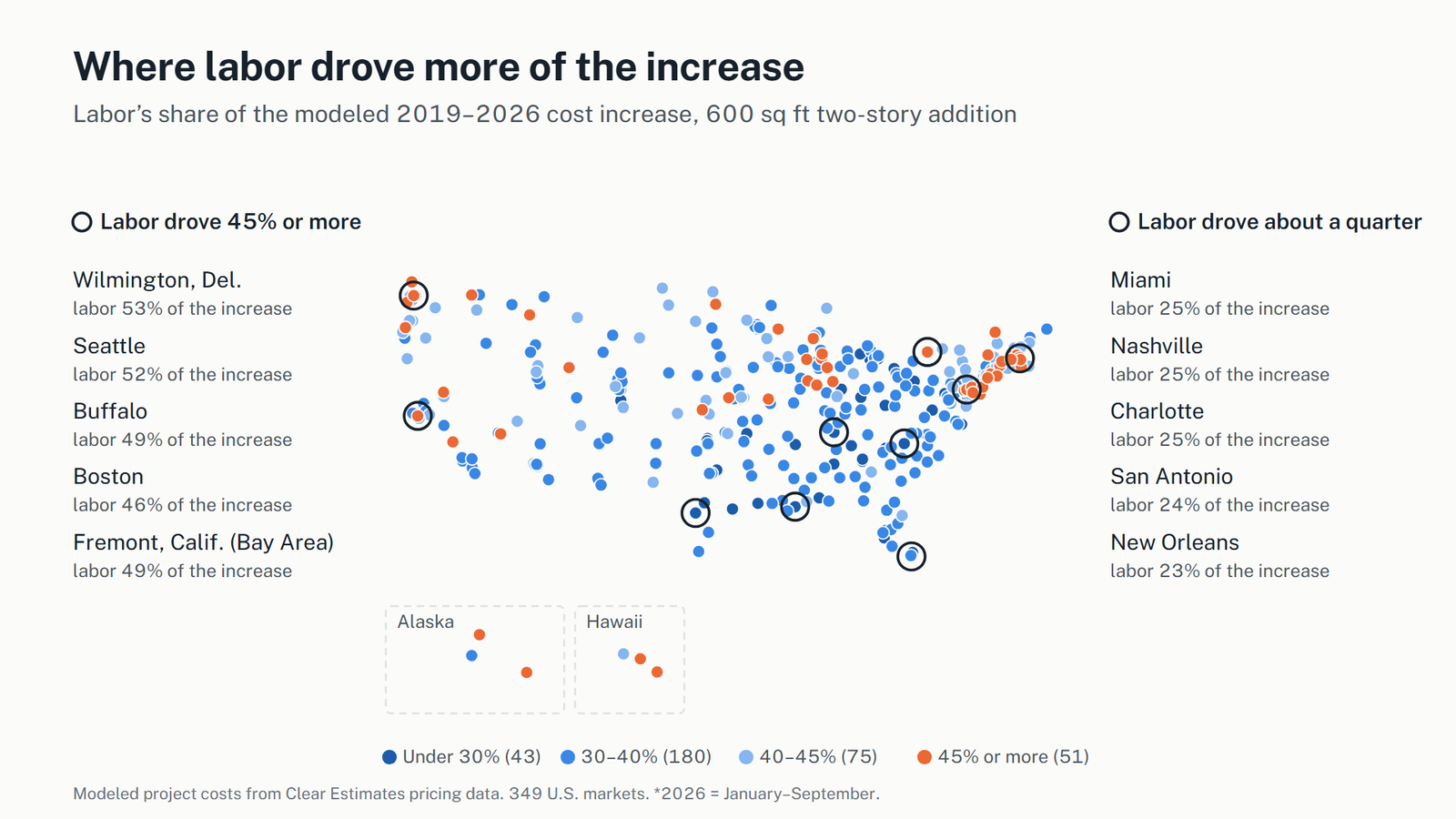
Split each market's increase into its material and labor parts and the differences are plain. In Wilmington, Del. (53%), Seattle (52%), Fremont, Calif. in the Bay Area (49%), Buffalo (49%) and Boston (46%), labor drove close to half of the addition's increase, or more. In Miami (25%), Charlotte (25%), Nashville (25%), San Antonio (24%) and New Orleans (23%), it was closer to a quarter.
Across all 349 markets, labor's share of the addition's increase ran from 23% to 54%. See how costs changed in your market.
What you build matters too
The project changes the split as well. An addition leans on lumber, drywall and concrete, so nationally its materials and labor rose by similar amounts. A kitchen remodel puts more of its budget into cabinets and appliances, which rose less. For the 300-square-foot kitchen, materials rose 22% while labor rose 40%.
What it means for your estimates
An estimate is only as current as both its material prices and its labor rates. Update one and not the other, and your numbers drift. They drift fastest in the markets where labor rose most, and on jobs where labor is a bigger part of the price.
Three checks worth making on your next bid:
- When were your labor rates last updated, trade by trade? Electrical and plumbing rates rose fastest.
- Do you price materials and labor separately? If not, you can't see which one moved.
- If you work in more than one market, are you carrying one market's labor rates into another? Rates rose at very different speeds, even between nearby cities.
Clear Estimates tracks material prices and labor rates for 349 markets and updates them every quarter.